
Measure your chest circumference, or lay a favorite tee flat and measure armpit to armpit, then double that number. Match the result to the brand’s garment chest width, not the letter on the tag. Prioritize chest and shoulder fit above everything else: size up if you’re between two sizes and want a relaxed feel, or size down for a fitted, slim cut. Before you check out, glance at the fabric content, since shirts made of 100% cotton can shrink after the first wash, affecting their original fit.
TL;DR:
- Always double the flat garment chest measurement to estimate the body chest circumference that the shirt is designed to fit.
- Use your own chest measurement or a trusted shirt’s flat-tee measurement for accurate size comparison, especially since size labels vary across brands and regions.
- Expect 3 to 5 percent shrinkage after the first wash for 100% cotton shirts, which should be factored into size choices, especially when between sizes.
- Prioritize garment measurements listed on brand websites over letter sizes, as sizing conventions differ widely between US, UK, EU, and Asian brands.
- For custom-fit shirts like the Plaid Tee, match your measurement to the garment’s chest width and choose size accordingly for a relaxed or close fit.
Table of Contents
- How to Choose T Shirt Size Using a Size Chart
- How Do I Measure Myself for a T-Shirt?
- Which Fit Type Should You Choose Based on Your Build?
- What Do I Do When I’m Between Two Sizes?
- Can a Size Calculator Actually Get It Right?
- Does Neck Size Matter for T-Shirts?
- Why Do Brand and Region Change What Size Fits?
- A Few Habits That Actually Cut Down on Returns
- How to Size the Plaid Tee the Right Way
- Sources
- FAQ
How to Choose T Shirt Size Using a Size Chart
Reading a size chart correctly comes down to one distinction most shoppers never learn: garment measurement versus body measurement. A garment measurement is taken flat, edge to edge, across the shirt itself. A body measurement is the circumference of your actual chest, taken with a tape measure wrapped all the way around. They’re related, but they are not the same number, and confusing them is the single most common reason a “medium” from one brand fits like a small from another.
Here’s the math that makes size charts make sense. Garment chest width, measured flat, roughly doubles to the body circumference the shirt is built to fit. A typical size chart shows a small at about 18 inches of flat garment width, a medium at 20 inches, a large at 22, and an extra large at 24. Double any of those and you get the approximate chest circumference that size is designed to accommodate, with roughly 2 to 4 inches of built-in ease for a regular fit.
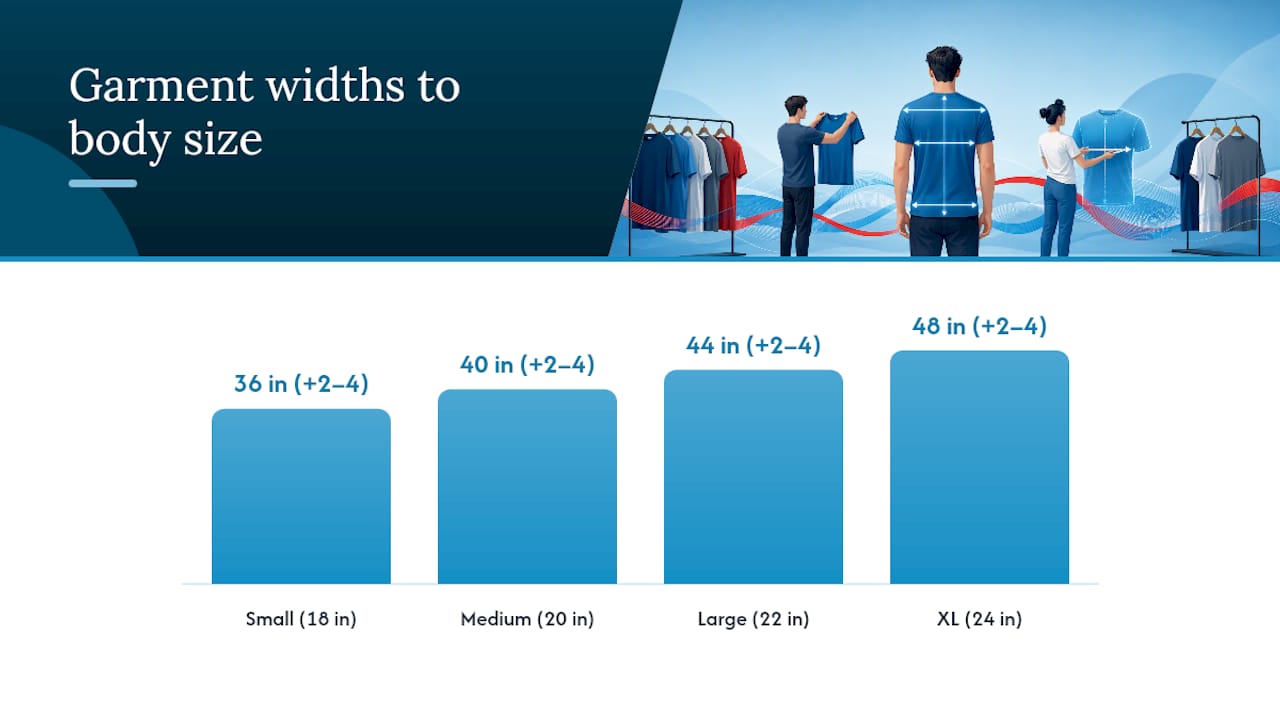
That ease is exactly why letter sizes lie to you. A “medium” cut slim has less ease than a “medium” cut relaxed, even though the tag says the same thing. Ease also shifts between US, UK, and EU sizing conventions, so a size label alone can’t be trusted across borders or even across two brands sold in the same store.
What actually works:
- Find the garment’s flat chest width on the size chart, not just the letter size.
- Double it to estimate the body circumference the shirt is built for.
- Compare that number to your own chest measurement or a shirt you already trust.
- Treat US, UK, and EU labels as a rough starting point only, never the final word, since conversions between them vary by brand.
How Do I Measure Myself for a T-Shirt?
Two methods get you a reliable number: measuring your body directly, or measuring a shirt that already fits the way you like. Both work. Pick whichever is easier to do accurately.
- Chest circumference. Wrap a tape measure around the fullest part of your chest, under your arms and across your shoulder blades. Keep the tape level and snug, not tight. This is your body measurement, and it needs the doubling math from the section above to compare against a garment chart.
- The flat-tee method. Lay a shirt you already love on a flat surface, buttoned or smoothed out, and measure straight across from armpit to armpit. Double that number for an instant, reliable comparison point. This is often faster and more accurate than measuring your own body, since it accounts for how you actually like a shirt to sit.
- Length. Measure from the highest point of the shoulder seam straight down to the hem.
- Shoulder width. Measure seam to seam across the back, where the sleeve meets the body of the shirt.
- Sleeve length and sleeve opening. Measure from the shoulder seam to the end of the sleeve, then measure the circumference of the sleeve opening itself. Sleeve opening gets ignored constantly, but a sleeve that’s too tight around the bicep will bother you every time you lift your arm, even if the chest fits perfectly.
Pro Tip: Wear a thin shirt or nothing heavier than a T-shirt when you measure. A bulky sweater underneath adds an inch or more to your chest number and throws off every comparison you make afterward.
Save these four numbers somewhere on your phone. You’ll use them for every future order, not just this one.
Which Fit Type Should You Choose Based on Your Build?
Once you know your numbers, the next decision is which cut to buy, because fit label changes what those numbers mean. A regular or standard fit builds in the most forgiving ease, generally 2 to 4 inches beyond your chest circumference. Semi-fitted trims that down for a cleaner line without hugging the body. Slim cuts run closest to the body and use the least ease of any category. Relaxed and oversized fits go the other direction entirely, adding extra room through the chest, body, and often the sleeve.
That range matters because the “right” size depends on the cut, not just your measurements.
- For slim cuts, prioritize chest and shoulder measurements above length. A slim tee that fits your chest but pinches your shoulders will never feel right, no matter how good the length looks.
- Women choosing a unisex tee often find it runs roomier through the body, since unisex blanks are typically built on a men’s block. Sizing down one letter usually gives a more tailored result; staying true to size gives a deliberately relaxed, boyfriend-style look.
- If you’re tall or plan to layer, size up in length before you size up overall. A shirt that’s an inch or two longer solves the “rides up” problem without adding unwanted bulk through the chest.
- True to size works when your measurement lands right in the middle of a size’s range. Size up one when you’re at the top edge of that range and want breathing room. Size up two only for a deliberately oversized, streetwear-style look.
What Do I Do When I’m Between Two Sizes?
The general rule: size up when comfort matters more than a tailored line, and stay true or size down when you’re buying something meant to fit close to the body. A slightly loose shirt is almost always more wearable day to day than one that pulls across the chest or rides up when you sit down.
Fabric changes that math, though. Shirts that are 100% cotton commonly shrink somewhere in the range of 3 to 5 percent after their first wash, particularly with warm water and a hot dryer. That’s enough to turn a comfortable fit into a snug one within a single laundry cycle. Cotton-poly blends and tri-blends shrink less and hold their shape more predictably, so a true-to-size call is safer with those fabrics than with pure cotton.
Quick rules worth keeping in your back pocket:
- Comfort-focused or relaxed style: size up.
- Fitted or tailored look: stay true to size, or size down slightly.
- 100% cotton: expect some shrinkage, and consider sizing up if you’re between two sizes.
- Blends and stretch fabrics: shrinkage is minimal, so trust your measurement more directly.
- Always check the brand’s return and exchange policy before you buy, and skim reviews for repeated comments about a specific style running small or large.
Can a Size Calculator Actually Get It Right?
Yes, most of the time. A chest-driven size calculator gets you within one size for the large majority of brands, and accuracy improves further when you add waist, hips, and height for fitted or tailored garments. The logic behind these tools is straightforward: they take your chest number, weigh it against average size bands across mainstream brands, and spit out a starting recommendation.
The smartest workflow combines both methods instead of picking one:
- Measure a tee you already own and love using the flat, armpit-to-armpit method.
- Enter that number, or your body measurement, into a calculator for a starting point.
- Take the calculator’s suggestion and check it against the specific brand’s own garment chart.
- Confirm the fit label, regular, slim, or relaxed, matches the look you actually want.
Calculators are a fast filter, not a final verdict. They work best as a way to skip straight to the size you should double-check, rather than the size you should blindly buy.
Does Neck Size Matter for T-Shirts?
For a standard crew neck or V neck tee, neck circumference doesn’t factor into sizing at all. The collar simply scales with the overall size, so a medium’s neckline is built to match a medium chest and shoulder measurement without any separate calculation. You can skip this step entirely for basic tee styles.
It becomes relevant for collared styles, henleys with a buttoned placket, or any T-shirt with a more structured neckline that’s meant to sit close to the throat. Here’s how to measure it if you’re buying one of those:
Wrap a soft tape measure around the base of your neck, roughly where a collar would naturally sit, just below the Adam’s apple. Keep it snug enough to stay in place but loose enough to slide two fingers underneath comfortably. That gives you a neck circumference in inches, which you then compare to the brand’s own chart if one is listed for that specific style.
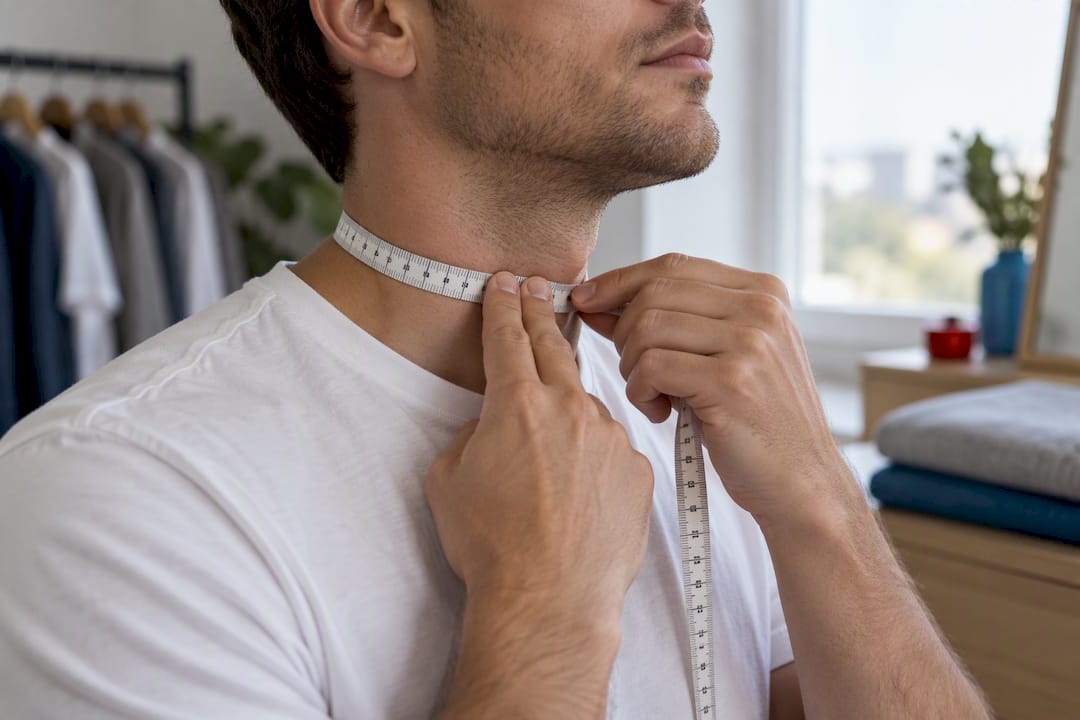
Most casual tee brands don’t publish a neck measurement at all, because a crew or V neck doesn’t need one. If a size chart does include neck circumference, it’s a signal the shirt has some structure to the collar, and it’s worth measuring before you order, since a collar that’s too tight around the throat is uncomfortable in a way that’s hard to fix after the fact. When in doubt, treat the chest and shoulder numbers as your primary guide and use neck circumference only as a tiebreaker for collared, dressier styles.
Why Do Brand and Region Change What Size Fits?
A medium from one brand and a medium from another can differ by a full inch or more in chest width, and that gap gets wider once you compare sizing across countries. A unisex medium commonly lands somewhere between a 38 and 41 inch chest, but that range shifts depending on where the brand is based and who it’s designing for.
US sizing tends to run generously, with more ease built into standard cuts. European sizing typically runs narrower and shorter, reflecting different regional fit expectations. Asian sizing charts, especially from brands based in Japan or Korea, often run smaller across the board, sometimes by a full size or more compared to US equivalents. A US large ordered from a Japanese brand can come out closer to a US medium.
The fix is the same one this entire guide has been building toward: stop trusting the letter and start trusting the garment chart. Every brand, regardless of country of origin, should publish flat garment measurements somewhere on the product page. Pull those numbers, compare them to your own chest measurement or your flat-tee number, and you sidestep the entire US/UK/EU/Asia guessing game. Letter sizes are a convenience label. Garment measurements are the actual contract between you and the shirt.
A Few Habits That Actually Cut Down on Returns
Keep a “golden tee” profile on your phone: the flat measurements of one shirt that fits exactly how you like. Every future purchase becomes a quick comparison instead of a guess. Favor brands that publish real garment charts and show sizing line-ups on actual bodies, and when you’re ordering shirts for a group, ask everyone for their numbers instead of assuming their usual size.
— Quincy
How to Size the Plaid Tee the Right Way
The Plaid Tee is designed for people who want a shirt that actually fits instead of one they hope fits. It’s made with attention to quality and comfort, so the sizing logic above applies directly.
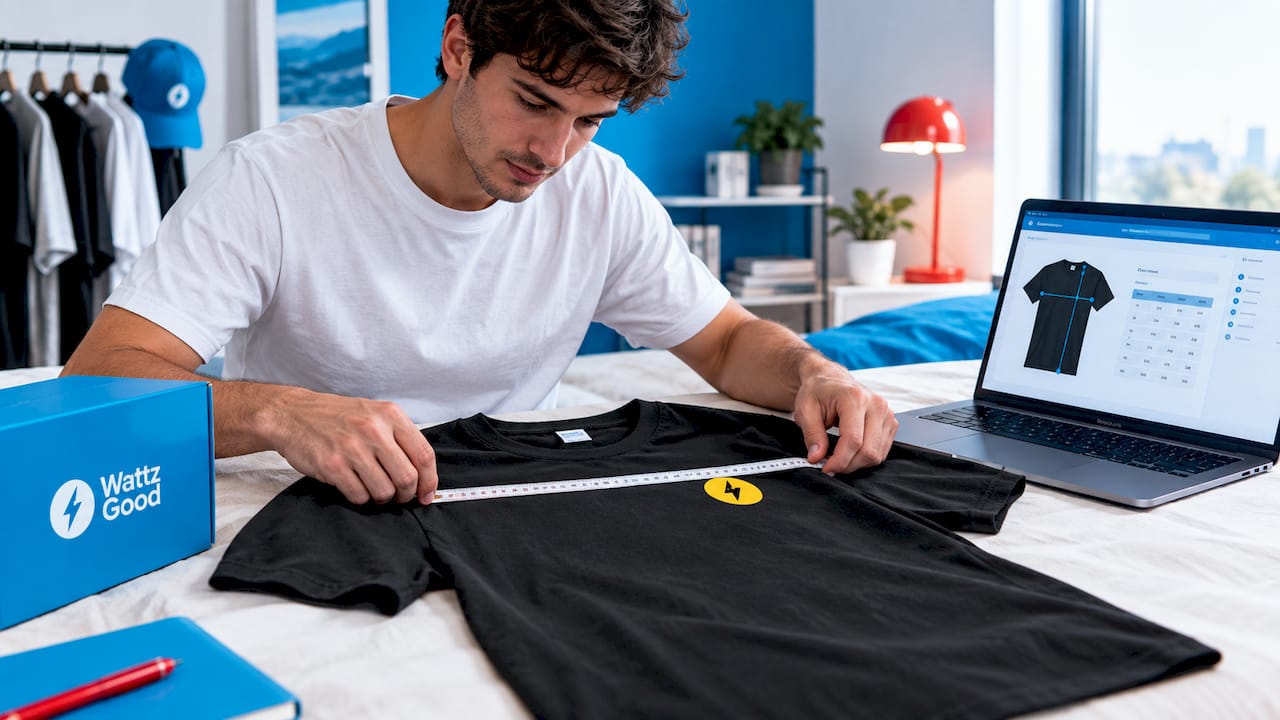
Start with your chest measurement or your flat-tee number from earlier in this guide. Pull up the Plaid Tee product page and compare that number against its listed garment chest width, not the S, M, or L label. If you land between two sizes and want a relaxed, easy drape, go up. If you want a cleaner, closer fit, stay at your true size. Check the fit label listed on the page so you know exactly what kind of cut you’re ordering before it ships. Head to the Plaid Tee page now to pull the exact garment measurements and lock in the size that actually fits.
Sources
- T-shirt size calculator — Tailor Size Guide
- Our Complete Custom T-shirt Sizing Guide: For Everyone & Every T-shirt Style - Custom Ink Blog
- T-Shirt Size Chart - MFG Merch
- T-Shirt Size Chart: US, UK, EU and AU Conversions - Wearlie
FAQ
Should I Size Up or Down for a T-Shirt?
Size up when comfort or a relaxed look matters more than a tailored silhouette, and size down or stay true for a fitted, slim cut. If you’re between sizes on a shirt that’s 100% cotton, sizing up gives you a buffer against the shrinkage that often follows the first wash.
How Do I Calculate My T-Shirt Size?
Measure your chest circumference with a tape measure, or lay a well-fitting tee flat and measure armpit to armpit, then double that number. Compare the result to the brand’s garment chest width on its size chart rather than relying on the letter size alone.
How Do I Determine My Shirt Size Based on My Height and Weight?
Height and weight alone give a rough estimate, but chest measurement is far more reliable for T-shirts specifically. A chest-driven calculator that also factors in height can narrow the recommendation further, especially for fitted or tailored styles.
Which T-Shirt Is Bigger, L or M?
A large is bigger than a medium in every standard size chart, typically by about 2 inches of flat garment chest width per size step. That gap can vary by brand and region, so checking the specific garment measurement matters more than assuming a fixed jump between the two.