
Fast fashion fails most environmental and labor tests, while ethical and sustainable fashion aim to reduce those harms through better wages, durable materials, and transparent supply chains. The comparison rests on five axes: environmental damage, labor conditions, chemical exposure, cost-per-wear, and how trustworthy a brand’s claims actually are. Read on to see the evidence and learn how to judge any brand yourself.
TL;DR:
- Fiber choices like recycled, natural, or responsibly sourced materials significantly reduce environmental impacts compared to polyester and conventional cotton.
- Brands claiming ethical sourcing should publish living-wage commitments, maintain long-term supplier relationships, and share independent factory audit results.
- High upfront cost does not always mean better value, as durable, quality garments often have a much lower cost-per-wear over time.
- Third-party certifications, clear supplier transparency, and verifiable claims help identify genuinely sustainable and ethical brands, unlike vague marketing language.
- Buying less, repairing, reselling, and choosing fiber-recyclable items are the most effective ways to reduce fashion’s environmental footprint.
Table of Contents
- Fast Fashion, Ethical Fashion, and Sustainable Fashion: What Each Term Actually Means
- The Environmental Toll of Fast Fashion’s Speed and Scale
- The Human Cost Behind Cheap Clothing
- What’s in the Fabric: Chemical Exposure and Health Risks
- Cost-Per-Wear: The Math That Makes Ethical Choices Practical
- Spotting Greenwashing: How to Read Sustainability Claims
- Repair, Resale, and Rental: Circular Habits That Actually Reduce Waste
- Where WattzGood Fits for Eco-Conscious Wardrobes
- How Fast Fashion Outpaced Slower Traditions
- Why Fast Fashion Still Wins Most Shopping Carts
- Rules and Initiatives Shaping Both Sides of the Industry
- Contrasting Strategies: What Different Brand Approaches Reveal
- What’s Next for Ethical Fashion
- Balancing Values with What You Can Actually Afford
- How WattzGood Supports the Ethical Shopper’s Closet
- Sources
- FAQ
Fast Fashion, Ethical Fashion, and Sustainable Fashion: What Each Term Actually Means
These words get used interchangeably, but they describe different priorities, and knowing the difference helps you spot marketing spin.
Fast fashion is a business model built on speed. Brands push new styles to market in weeks, price items low, and rely on volume to profit, which means garments are often designed for a handful of wears rather than years of use. Ethical fashion focuses on the people making the clothes: living wages, safe factory conditions, and transparency about who is in the supply chain. Sustainable fashion, sometimes called slow fashion, focuses on materials and lifecycle: natural or recycled fibers, durability, and circularity so garments stay useful instead of becoming waste.
The terms overlap in practice. A brand can pay fair wages while using synthetic fabrics that shed microplastics, or use organic cotton while still running underpaid factories. Neither ethical nor sustainable fashion is automatically the other.
A quick way to place a brand:
- Speed: New collections every few weeks signal a fast-fashion model, not a slow one.
- Labor claims: Specific, published wage or safety commitments point toward ethical practices; vague statements do not.
- Material and lifespan: Durable natural or recycled fibers designed to last for years suggest a sustainable approach.
The Environmental Toll of Fast Fashion’s Speed and Scale
Fast fashion’s core problem is volume: more garments made faster, worn fewer times, and discarded sooner.
The textile and fashion industry generates an estimated low to moderate single-digit percentage of global greenhouse gas emissions and consumes a very large volume of water annually, roughly equivalent to tens of millions of Olympic-sized swimming pools, according to a UNEP analysis of fashion’s environmental footprint. That range reflects everything from raw fiber production to dyeing, transport, and disposal.
Two material choices drive much of this. Polyester, the most common fiber in fast fashion, is petroleum-based and sheds microplastic fibers with every wash, contributing to ocean pollution that NOAA has documented as a persistent and widespread contamination source. Conventional cotton, meanwhile, is water-intensive and often grown with heavy pesticide use, straining water supplies in already dry growing regions.
Trace a typical fast-fashion garment through its life: raw fiber production consumes water and energy, manufacturing adds dye chemicals and more energy use, a few wears follow, and then disposal sends the item to a landfill or incinerator, since most synthetic blends are difficult to recycle. Compress that cycle into weeks instead of years and the per-garment impact multiplies across an entire wardrobe.
What actually moves the needle:
- Fiber choice matters more than marketing copy. Natural, recycled, or responsibly sourced fibers reduce microplastic shedding and often cut water use.
- Design for durability beats design for trend. A UNEP roadmap on textile circularity argues that shifting value toward longevity and repairability, rather than volume, is central to cutting the sector’s footprint.
- Fewer, better purchases outperform frequent cheap ones across nearly every environmental measure.
The Human Cost Behind Cheap Clothing
Low prices at checkout usually mean someone upstream absorbed the cost, and that person is typically a garment worker.
Buyer-driven pressure is the mechanism. Fast-fashion brands demand fast turnaround and rock-bottom unit prices, which pushes factories toward overtime, thin safety margins, and wages that fall short of a living income. ILO research on purchasing practices in garment supply chains found that a small premium per T-shirt, around a few cents to a few tens of cents, could, in documented cases, allow a factory to double workers’ wages, though living wages remain rare across the industry. That gap between what is technically possible and what actually happens illustrates how thin the margin for worker welfare really is.
The garment workforce is majority female, and the health and social consequences of underpayment and unsafe conditions fall disproportionately on women and their families. Uneven order planning compounds the problem: a brand might place a massive rush order one month and nothing the next, leaving factories to absorb the instability through layoffs or forced overtime.
What to look for when a brand claims ethical sourcing:
- Published living-wage commitments with timelines, not just a statement of intent.
- Long-term supplier relationships rather than constantly shifting factory contracts, which research on buyer strategies and durable orders links to steadier wages and conditions.
- Independent factory audits with results a brand is willing to share, not just a logo.
Pro Tip: A brand that names its factories and publishes audit summaries is telling you more than one that simply says it “cares about workers.”
What’s in the Fabric: Chemical Exposure and Health Risks
Textile processing relies on a wide array of chemicals for dyeing, bleaching, and finishing, and the concern extends beyond the finished garment.
Textile dyeing and finishing involve thousands of chemical substances, and even small concentrations can create hazards for the workers handling them, according to a UNEP technical highlight on sustainable fashion. Wastewater from dye houses can carry those chemicals into local waterways, and synthetic fibers continue shedding microplastic particles long after the garment leaves the factory floor, adding a second layer of environmental contamination.
For consumers, the practical signals worth checking are third-party chemical management standards, published restricted-substance lists, and whether a brand makes any test data available at all. A brand that discloses none of this isn’t necessarily hiding something, but it also isn’t giving you anything to verify.
Cost-Per-Wear: The Math That Makes Ethical Choices Practical
Ethical shopping doesn’t have to mean spending more overall, and cost-per-wear is the tool that proves it.
The math is simple: divide the price by the number of times you actually wear the item. A University of Bath case study on cost-per-wear data found that higher-priced garments built to last often cost less per wear than cheap, short-lived alternatives, even though the sticker price looks worse at checkout.
Consider an illustrative example: a $10 fast-fashion tee that survives 5 wears before it stretches out or falls apart costs $2.00 per wear. A $40 tee built from durable fabric that lasts 200 wears costs $0.20 per wear, ten times cheaper over its life.
- Calculate cost-per-wear before buying by estimating how many times you’ll realistically wear an item.
- Watch for psychological obsolescence, the sense that a garment looks “old” after a few wears even though nothing is physically wrong with it, which drives repeat purchases.
- Favor quality basics over trend pieces when your budget allows, since basics get worn far more often than trend-driven items.
Spotting Greenwashing: How to Read Sustainability Claims
Not every “eco-friendly” label means what it implies, and regulators have taken notice.
The FTC’s Green Guides caution that terms like “sustainable” and “eco-friendly” are not formally defined, so marketers should make specific, substantiated claims rather than broad, unqualified ones. A brand that says a shirt is “made with 30% recycled polyester” is giving you something to check; a brand that just says “eco-friendly fabric” is not.
Reliable signals to look for:
- Third-party certifications such as GOTS, Fairtrade, or OEKO-TEX, which involve independent verification rather than self-reporting.
- Supplier transparency, including factory locations or names, not just country-level sourcing claims.
- Published living-wage roadmaps with actual dates and targets attached.
Red flags include vague language with no specifics, marketing images with no accompanying data, and claims that contradict each other across a brand’s own product pages. A practical guide to responsibly made fashion offers a useful quick-reference checklist if you want a second opinion before buying.
Pro Tip: If a claim can’t be traced to a specific certification, supplier name, or number, treat it as marketing, not evidence.
Repair, Resale, and Rental: Circular Habits That Actually Reduce Waste
The most effective way to cut fashion’s footprint isn’t always buying differently, it’s buying less and keeping what you already own in use longer.
- Repair before replacing. Learn basic fixes like reattaching buttons or patching seams, since these small repairs extend a garment’s life far more cheaply than replacement.
- Buy secondhand for basics and one-off pieces. Consignment shops, thrift stores, and resale apps often carry higher-quality items than new fast-fashion stock at a fraction of the price.
- Rent for occasion wear. Formal or trend-driven pieces you’ll wear once or twice make more sense borrowed than owned.
- Check recyclability before buying new. Single-fiber garments are easier to recycle than fiber blends, so a 100% cotton tee has a clearer end-of-life path than a cotton-polyester mix.
Beyond individual habits, collective pressure matters too. Supporting brand take-back programs and extended producer responsibility policies pushes the burden of end-of-life disposal back onto manufacturers rather than landfills. Shifting cultural messaging away from “new is better” and toward “well-made lasts” is slower work, but it’s the backdrop against which all of these individual choices happen.
Pro Tip: Before donating worn-out items, check if the retailer or a local program accepts them for fiber-to-fiber recycling rather than assuming a thrift store can resell them.
Where WattzGood Fits for Eco-Conscious Wardrobes
WattzGood offers designs that align with eco-friendly and EV ideologies, catering to shoppers seeking apparel that reflects environmentally conscious values. That focus matters to readers weighing the choices above, because wearing your values is easier when the product itself is built with longevity in mind.
The catalog includes pieces such as the EV over GAS tee, designed for electric vehicle enthusiasts who want their clothing to express their values. The Plaid Tee features a classic, durable pattern intended for long-term wear rather than seasonal trends. The Wattz Logo Tee presents the brand’s message in a simple design suitable for regular wear.
How Fast Fashion Outpaced Slower Traditions
Clothing production for most history moved at the pace of seasons, not weeks. Tailors and small manufacturers produced limited runs, and garments were expected to last years, often getting repaired or altered rather than discarded.
The shift toward fast fashion accelerated as global supply chains matured and retailers realized that shorter production cycles and constant new inventory kept shoppers returning more often. Offshoring manufacturing to countries with lower labor costs made rapid, cheap production financially possible at a scale earlier manufacturing models couldn’t match.
Ethical and sustainable fashion movements grew partly in response, gaining visibility after high-profile factory disasters exposed the human cost hidden behind low price tags. Certification bodies, transparency initiatives, and secondhand marketplaces expanded as consumers and advocacy groups pushed for accountability. The two models now coexist, with fast fashion still dominating retail volume while ethical alternatives carve out a smaller but growing share built on different priorities entirely.
Why Fast Fashion Still Wins Most Shopping Carts
Fast fashion’s popularity isn’t a mystery: low prices, constant novelty, and instant availability align neatly with how many people actually shop, especially when a trend feels time-sensitive.
Social media accelerates this cycle by turning outfits into short-lived content rather than long-term purchases, which rewards brands that can turn around new styles in days. Price sensitivity plays a role too, since a $10 item feels low-risk even when it won’t last, while a $40 durable alternative requires more upfront trust in the brand and the product.
Ethical fashion faces the opposite set of obstacles. Higher prices upfront, less product variety, and fewer options in a shopper’s exact size or style all create friction that fast fashion has engineered away. Choice-experiment research on clothing consumption trade-offs suggests that when shoppers are shown clear information about health and working conditions, willingness to pay a premium rises, meaning the barrier is often information, not indifference.
Rules and Initiatives Shaping Both Sides of the Industry
Regulation is starting to catch up to an industry that has largely governed itself through voluntary pledges.
In the United States, the FTC’s Green Guides set the baseline for how environmental marketing claims can be worded, requiring specific, substantiated statements rather than vague assurances of sustainability. That framework applies to any brand marketing to American shoppers, regardless of where the garment was made.
Beyond national regulation, industry-driven initiatives push toward accountability in different ways. Certification programs verify labor and material standards independently of brand self-reporting, and the UNEP global roadmap for textile circularity lays out a framework for reducing the sector’s environmental footprint through design-for-durability and circular business models rather than relying on individual consumer choices alone. These efforts remain uneven across markets, but they represent the direction that both regulators and larger manufacturers are being pushed toward.
Contrasting Strategies: What Different Brand Approaches Reveal
Two general strategies dominate the industry, and comparing them side by side clarifies what each trades away.
The fast-fashion strategy prioritizes speed and price. Brands following this model compress design-to-shelf timelines to weeks, order in massive volume to keep unit costs low, and rely on constant new arrivals to keep shoppers checking back. The trade-off is durability and worker stability, since compressed timelines and thin margins are exactly the buyer-driven pressures linked to overtime and underpayment discussed earlier.

The ethical and sustainable strategy prioritizes longevity and transparency instead. Brands following this model plan orders further in advance, commit to fewer but more durable styles, and publish more detail about where and how garments are made. The trade-off here is higher prices and slower inventory turnover, which limits how quickly these brands can scale compared to fast-fashion competitors.
Neither strategy is universal within a company. Some retailers run fast-fashion pricing alongside a smaller “conscious” or certified line, which is worth noticing when you evaluate a brand: the existence of one sustainable collection doesn’t mean the rest of the catalog follows the same standards.
What’s Next for Ethical Fashion
Ethical fashion is shifting from a niche category into something closer to a standard expectation, driven partly by regulation and partly by shoppers demanding evidence over slogans.
Design-for-durability is likely to expand beyond a marketing phrase into an actual production standard, following the direction UNEP’s circularity roadmap lays out: garments engineered from the start to be repaired, resold, and eventually recycled rather than discarded. Fiber innovation, including recycled and bio-based materials that reduce reliance on virgin polyester, will likely keep gaining shelf space as brands look for materials that satisfy both durability and lower environmental impact.
Transparency tools are also maturing. Supply-chain tracking technology makes it easier for brands to publish specific, verifiable claims rather than vague ones, which aligns with what the FTC’s guidance has been pushing toward for years. As certification and disclosure become easier to produce, the red flags described earlier, vague language, missing data, will likely become harder for brands to hide behind, simply because credible alternatives are more available to point to.
Balancing Values with What You Can Actually Afford
Perfect ethical shopping doesn’t exist, and chasing it usually leads to paralysis instead of progress. A more useful goal is directional: buy less, prioritize durability and living-wage commitments where your budget allows, and treat a claims checklist and cost-per-wear math as your default filter before any new purchase.
Small, consistent choices beat occasional perfect ones. Start with one habit, checking cost-per-wear before you buy, and let the rest follow.
— Quincy
How WattzGood Supports the Ethical Shopper’s Closet
Finding apparel that actually reflects EV and sustainability values, instead of generic slogans on a mass-produced blank, is harder than it should be. WattzGood built its catalog specifically to close that gap, pairing witty EV-themed designs with a focus on quality construction meant to hold up over repeated wear rather than one season.
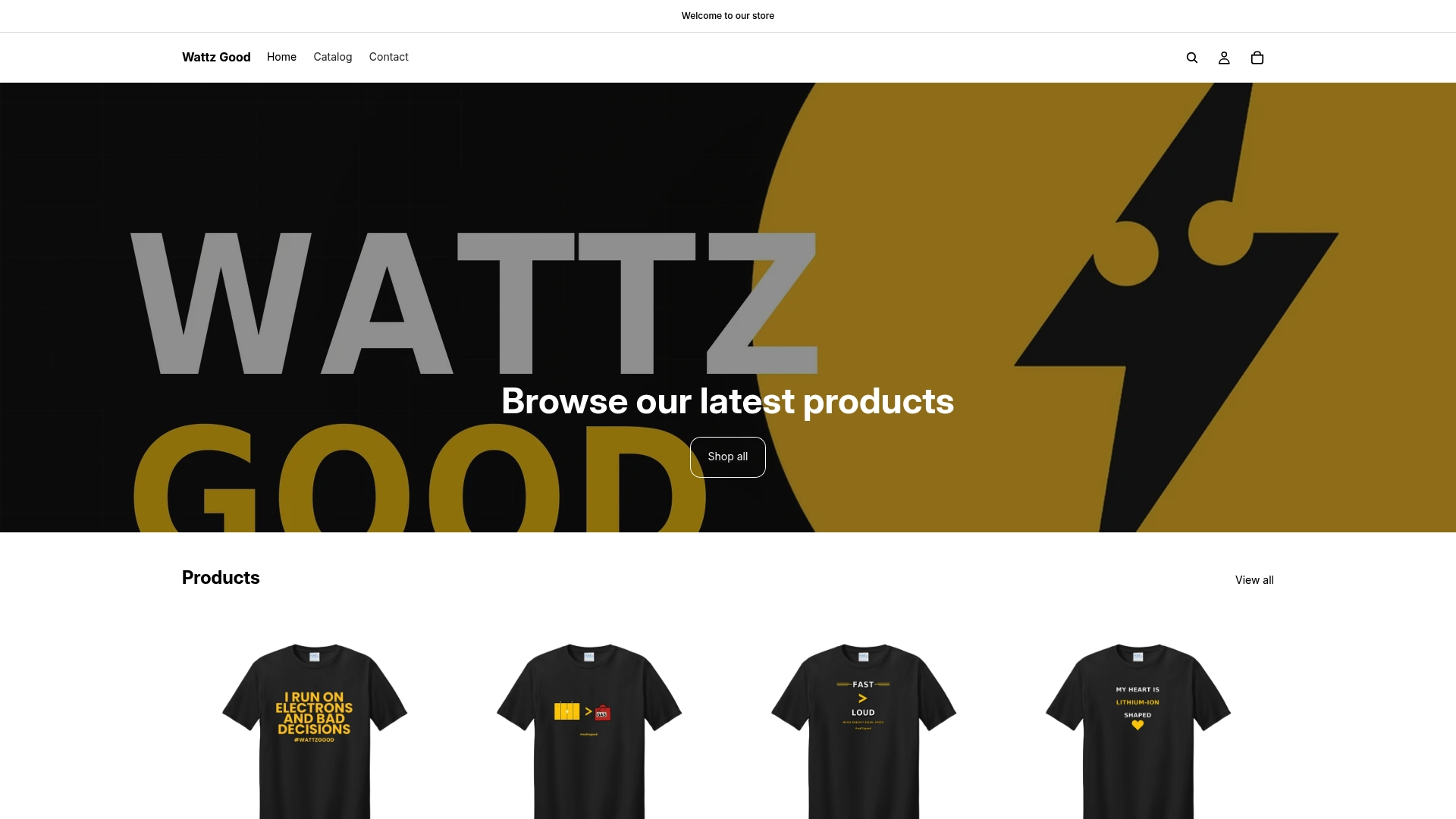
A few pieces worth a look if you’re building a wardrobe around these values:
- The EV over GAS tee for drivers who want their shirt to say what their driveway already says.
- The Plaid Tee for a durable, everyday pattern built to outlast a single season.
- The Wattz Logo Tee for simple, repeatable branding that fits into regular rotation.
As with any purchase, run new items through the claims checklist above and follow the care instructions to maximize cost-per-wear. Browse the full lineup at WattzGood to see what fits your closet.
Sources
- Minimizing fashion’s environmental footprint | UNEP Annual Report
- Sustainability and Circularity in the Textile Value Chain: A Global Roadmap (UNEP)
- Could clothing’s cost-per-wear data help to combat fast fashion? — University of Bath
FAQ
Is Fast Fashion an Ethical Issue?
Yes, fast fashion raises ethical concerns on both labor and environmental grounds, since its speed and low pricing depend on cost pressures that research ties to underpayment and unsafe factory conditions. The ILO’s analysis of purchasing practices links buyer demands for speed and low prices directly to wage suppression in supplier factories.
Is Shein More Ethical Now Than Before?
Public information on specific fast-fashion retailers’ current labor and environmental practices isn’t consistently available in the sources reviewed for this article, so no verified answer can be given here. The safest approach for any brand, including Shein, is to check for the specific signals covered above: published wage commitments, third-party certifications, and supplier transparency rather than general assurances.
Is H&M Ethical or Unethical?
Rather than labeling any single retailer, the more useful approach is to apply the claims checklist covered in this article: look for specific, substantiated claims per the FTC’s Green Guides, published supplier lists, and independent certifications rather than marketing language alone. A brand offering one certified “conscious” line alongside a much larger conventional fast-fashion catalog is still primarily operating on a fast-fashion model.
Is Zara Considered Ethical Fashion?
As with other large fast-fashion retailers, specific current ethical claims about Zara aren’t covered by the sources used in this article, so no verified answer can be given here. Readers evaluating Zara or any similar retailer should apply the same checklist: verified certifications, supplier transparency, and durability of the garments themselves, rather than relying on brand reputation alone.
What’s the Difference Between Ethical and Sustainable Fashion?
Ethical fashion centers on the people making clothes, focusing on fair wages, safe working conditions, and supply-chain transparency. Sustainable fashion centers on materials and lifecycle, focusing on durable or recycled fibers and circularity, and a brand can meet one standard without automatically meeting the other.