
A comfortable road trip outfit comes down to one formula: a soft base layer, two relaxed pieces, one structured anchor, and slip-on shoes with real support. Pack for the 1-2-1 rule and the three-pair shoe system, and you stop guessing at every gas station. The rest is just packing smart and layering for whatever the weather throws at you.
TL;DR:
- Packing three pairs of shoes covering walking, casual, and dressier occasions minimizes weight and maximizes versatility on long trips.
- Choosing fabrics like merino wool, ponte knit, and TENCEL ensures comfort, wrinkle resistance, and odor control during extended sitting periods.
- Using the 1-2-1 outfit formula plus layering helps maintain a cohesive wardrobe with minimal overpacking, suited for diverse weather and activities.
- Weather-specific gear, such as packable rain shells and windbreakers, ensures preparedness for sudden weather changes without bulk.
- Repeating favorite, durable pieces like WattzGood tees and applying regular breaks every two hours boost comfort and outfit consistency during multi-day drives.
Table of Contents
- What to Wear on a Road Trip: Outfit Formulas You Can Copy
- Shoes: Follow the Three-Pair Rule
- The Best Fabrics for Sitting All Day
- Layering for Car AC, Sun, and Surprise Weather
- Packing Smart: Capsule Wardrobe and Gear That Earns Its Space
- Ready-to-Wear Templates for Every Stop
- Staying Fresh on a Multi-Day Trip
- Camping Trip vs. City Stops: Dressing for the Type of Trip
- Balancing Style and Comfort Without Overthinking It
- Gear for Rain, Wind, and Sudden Cold Snaps
- Accessories That Make the Whole Trip Easier
- Why WattzGood Designs for the Road, Not Just the Closet
- Building Your Capsule Around WattzGood Tees
- Sources
- FAQ
What to Wear on a Road Trip: Outfit Formulas You Can Copy
Forget rebuilding an outfit from scratch at every stop. The 1-2-1 formula is one fitted piece, two relaxed pieces, and one structured anchor, and it cuts decision fatigue while still looking put together when you climb out of the car for lunch. Pair that with a 3-layer approach (base, mid, outer) and you’re covered whether the AC is blasting or you’re standing in a parking lot at 6 a.m.
Here’s how that plays out in real outfits:
- Fitted tee + relaxed joggers + oversized flannel + slip-on sneakers. The flannel is your structured anchor and doubles as a layer when the rest stop is windy.
- Ribbed tank + wide-leg pants + lightweight jacket + loafers. Works for city stops where you want to look intentional, not like you just drove six hours.
- Soft crewneck + leggings + denim jacket + trail shoes. Built for cold mornings and trailhead detours.
- Graphic tee + relaxed shorts + button-up shirt (worn open) + sandals. The summer version, with the shirt acting as sun protection and your anchor piece.
A consistent uniform like this reduces packing stress and keeps every outfit looking deliberate, even by day four.
Shoes: Follow the Three-Pair Rule
Three pairs of shoes handle nearly every road trip scenario, and packing a fourth “just in case” pair is almost always dead weight. The three-pair rule breaks down like this:
- A supportive walking or hiking shoe for trailheads, national parks, or any stop where you’ll be on your feet for more than twenty minutes.
- A casual slip-on or sandal for driving comfort and quick gas station runs. Slip-ons matter more than people think. Nobody wants to bend down and re-lace sneakers five times a day.
- A slightly polished flat or loafer for a nicer dinner or a city stop where sneakers feel out of place.
Store shoes in a shoe bag or a designated cube so they don’t scuff your clothes, and keep the slip-on pair within reach in the front seat area, not buried in the trunk.
Pro Tip: Keep your driving shoes flat and flexible. A stiff sole or a thick heel makes it harder to feel the pedals and adds fatigue on long stretches.
The Best Fabrics for Sitting All Day
Fabric choice determines whether hour six in the car feels fine or feels like torture. Merino wool, ponte knit, TENCEL or lyocell blends, and soft jersey cotton all move with your body and resist the wrinkles that come from hours of sitting. Skip raw linen and stiff, non-stretch denim. Both look sharp on a hanger and both crease and dig in within an hour of driving.
Waistbands matter as much as the fabric itself. Elastic or drawstring waists beat rigid, buttoned waistbands every time you’re seated for a long stretch, and flat seams keep pressure points from turning into real discomfort. Merino carries an extra advantage here: its odor resistance and re-wear properties mean you can wear the same top twice without anyone noticing, which saves real space in your bag.
- Merino tees and lightweight sweaters: breathable, odor resistant, good for multiple wears
- Ponte knit pants or joggers: stretch without looking sloppy
- TENCEL or lyocell tops: soft, wrinkle resistant, cool against skin
- Skip: raw linen, non-stretch denim, anything with a rigid waistband
Layering for Car AC, Sun, and Surprise Weather
A simple base, mid, outer system keeps you comfortable whether you’re stuck in blasting AC or standing outside at a scenic overlook in the wind. The base layer is your tee or tank, the mid layer is a light sweater or button-up, and the outer layer is a packable jacket that handles wind, sun, or a cold gas station at 5 a.m.
For hot itineraries, skip the mid layer and just carry the outer piece folded on the seat. For mild trips, wear the mid layer loose and swap it for the outer piece only at stops. For cold routes, layer all three and add gloves or a beanie in the door pocket, not the trunk.
A lightweight, packable jacket is arguably the single most useful item you’ll bring. Frequent travelers treat it as non-negotiable because it provides warmth, doubles as a pillow on long stretches, and instantly elevates a plain tee and jeans. A scarf pulls the same double duty, working as a blanket for a napping passenger or a makeshift sun shield against the window.
Packing Smart: Capsule Wardrobe and Gear That Earns Its Space
A road trip capsule works on the rule of threes: pick pieces that each pair with at least three other items, and you can build a week of outfits from a carry-on or a small duffle. This keeps you from overpacking single-use outfits that only work with one specific top or bottom.
- Pack three to four tops, two to three bottoms, one structured jacket, and your three pairs of shoes. That’s a full capsule that mixes into a dozen different combinations.
- Bring packing cubes to separate clean clothes from worn ones, and a small handheld steamer if you’re stopping anywhere nice enough to care about wrinkles. Both tools reliably cut down on wrinkling and make outfit changes faster at rest stops.
- Plan for laundry around day four or five on longer trips. A laundromat stop or a hotel with a washer means you can pack lighter than you think.
- Repeat your favorite pieces on purpose. Nobody on a road trip is tracking whether you wore the same merino tee twice.
A carry-on-sized bag or small duffle forces the discipline that a giant suitcase never will.
Ready-to-Wear Templates for Every Stop
These are copy-and-paste outfits built around the 1-2-1 formula, adjusted for season and who’s behind the wheel.
- Summer, driver: Fitted tee, relaxed shorts, open button-up, slip-on sneakers. Loose shorts avoid waistband pressure on long stretches.
- Summer, passenger: Tank top, wide-leg linen-blend pants, sandals. More room to fold your legs up if you want.
- Mild weather: Long-sleeve merino tee, joggers, denim jacket, trail shoes. Swap the jacket for a flannel if temps swing warmer midday.
- Cold weather: Thermal base layer, fleece-lined leggings, packable puffer, lined boots for stops, slip-on sneakers for driving.
- Active stop (hiking, exploring): Moisture-wicking tee, stretch pants, light windbreaker, supportive hiking shoes swapped in at the trailhead.
Drivers should lean toward flatter, flexible shoes and looser waistbands. Passengers have more flexibility to wear structured pants or a dressier top since they’re not working pedals for six hours straight.
Staying Fresh on a Multi-Day Trip
Freshness on a multi-day trip comes down to fabric choice, a small hygiene kit, and knowing which pieces can survive a second wear. Merino and other odor-resistant knits genuinely change the math here, letting you re-wear a top without anyone noticing.
Build a small hygiene bag that lives up front, not in a suitcase buried under everything else: travel deodorant, face wipes, a toothbrush, and dry shampoo cover most of what a hotel bathroom won’t fix between stops. Compression socks help too, not just for circulation on long drives but because they keep feet from swelling and sweating inside closed shoes.
A few habits make a bigger difference than people expect:
- Change socks and underwear daily even if outer layers get repeated.
- Keep a separate small bag for worn clothes so they don’t mix with clean items in your cube system.
- Air out shoes overnight when you stop somewhere for more than a few hours.
- Pack a travel-size wrinkle spray or the handheld steamer mentioned earlier for a quick refresh before dinner.
Experts on long drives also point to a 15-minute break every two hours as a baseline. That break is also your best opportunity to freshen up, stretch, and swap into your slip-on shoes for a few minutes of walking around.
None of this requires a suitcase full of backup outfits. It requires a few smart fabric choices and a hygiene kit that’s actually within reach.
Camping Trip vs. City Stops: Dressing for the Type of Trip
A road trip built around campgrounds and trailheads calls for a different wardrobe than one built around city stops and boutique hotels, even if the driving itself looks identical. Camping trips need more durable, weather-ready pieces. City touring trips need pieces that photograph well and transition into a nice dinner.
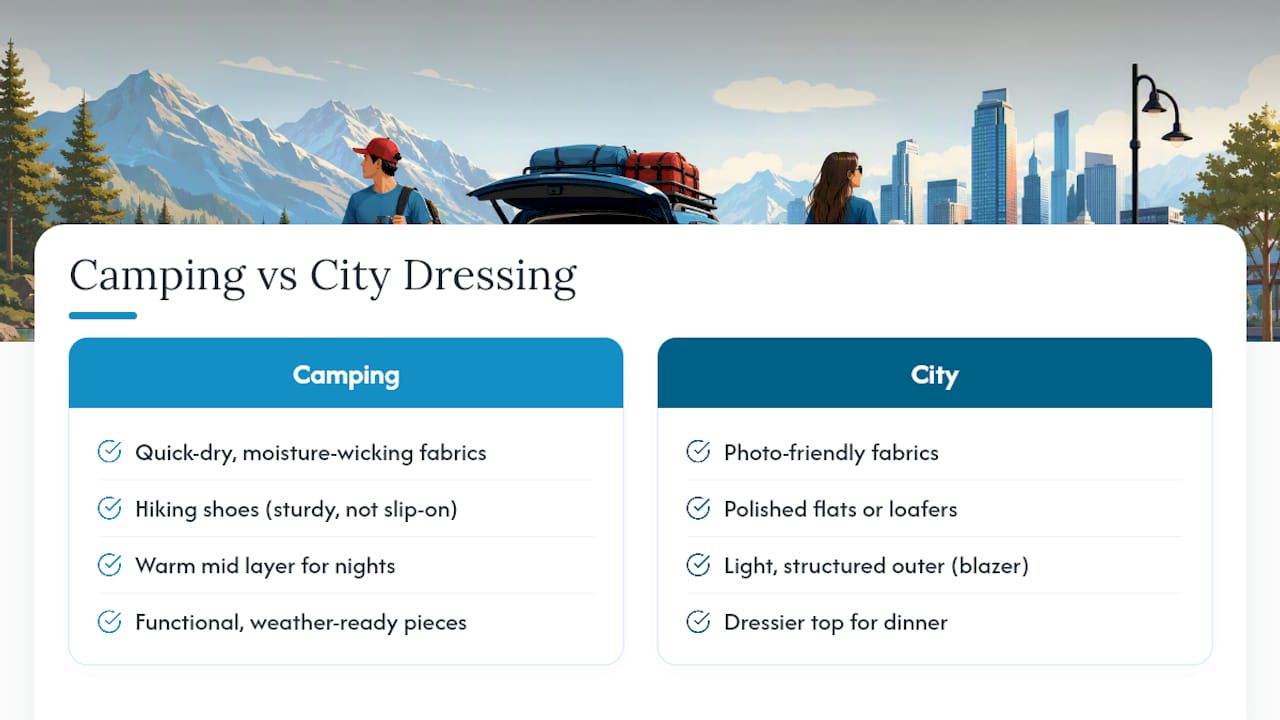
For camping-heavy trips, prioritize moisture-wicking base layers, a real hiking shoe (not just a slip-on sneaker), and at least one warm mid layer, since campgrounds get colder at night than most people expect. Quick-dry fabrics matter more here than anywhere else, since laundry access might be nonexistent for days.
For city-focused road trips, the polished flat or loafer from your three-pair shoe rotation gets more use, and it’s worth packing one slightly dressier top even if the rest of your capsule stays casual. You’re more likely to end up at a restaurant, a museum, or a rooftop bar than a trailhead, so your structured anchor piece should lean toward a blazer or tailored jacket rather than a flannel.
Mixed itineraries, the kind where you’re hiking one day and hitting a downtown strip the next, benefit most from the capsule approach described earlier. Build your bag around pieces that swing both directions: a merino tee works at a campsite and under a jacket at dinner, and stretch pants work on a short trail and look fine at a casual restaurant. The three-pair shoe rule earns its keep here specifically because it assumes you won’t know exactly what each day holds until you’re in it.
Balancing Style and Comfort Without Overthinking It
Practicality wins the argument every time comfort and style conflict, but that doesn’t mean the outfit has to look like loungewear. The trick is picking practical fabrics and silhouettes, then adding one intentional detail, a structured jacket, a graphic tee with a message you actually care about, a decent pair of sunglasses, that signals you put thought into it.
The 1-2-1 formula already does most of this work. The structured anchor piece, whether it’s a flannel, blazer, or denim jacket, is what keeps a relaxed outfit from reading as sloppy. Drop that one piece and even the most comfortable joggers-and-tee combo starts to look like you rolled out of bed.
Color and print help too, and cost nothing in comfort. A graphic tee or a plaid pattern adds personality without sacrificing the stretch and breathability that make long drives bearable. This is where a lot of people overcorrect. They either dress for comfort and end up looking like they’re headed to bed, or they dress for style and regret it by hour three. The fix isn’t choosing one over the other. It’s picking fabrics that do both jobs at once.
Gear for Rain, Wind, and Sudden Cold Snaps
Road trip weather rarely matches the forecast you checked before leaving, so a few weather-specific pieces belong in every bag regardless of season. A packable rain shell, one that folds down small enough to live in a door pocket, handles sudden downpours without eating suitcase space. Skip anything that isn’t genuinely packable. A bulky raincoat defeats the purpose.
Wind is the most underestimated condition on a road trip. Overlooks, beaches, and mountain passes all tend to be windier than the valley you drove through to reach them, and a lightweight windbreaker solves this better than a heavy jacket would. Layer it over your mid layer and you’ve got wind protection without overheating once you’re back in the car.
For sudden cold snaps, especially at elevation or during early morning starts, pack one warm layer you wouldn’t otherwise think to bring: a beanie, gloves, or a fleece that lives in the trunk until you need it. These items take up almost no space and solve a problem that ruins an otherwise good trip.
A few non-negotiables for unpredictable weather:
- A packable rain shell that fits in a door pocket or small bag
- A lightweight windbreaker for overlooks and coastal stops
- One warm layer (beanie, gloves, or fleece) stored where you can reach it quickly
- Water-resistant shoes if your route includes any chance of hiking in wet conditions
Accessories That Make the Whole Trip Easier
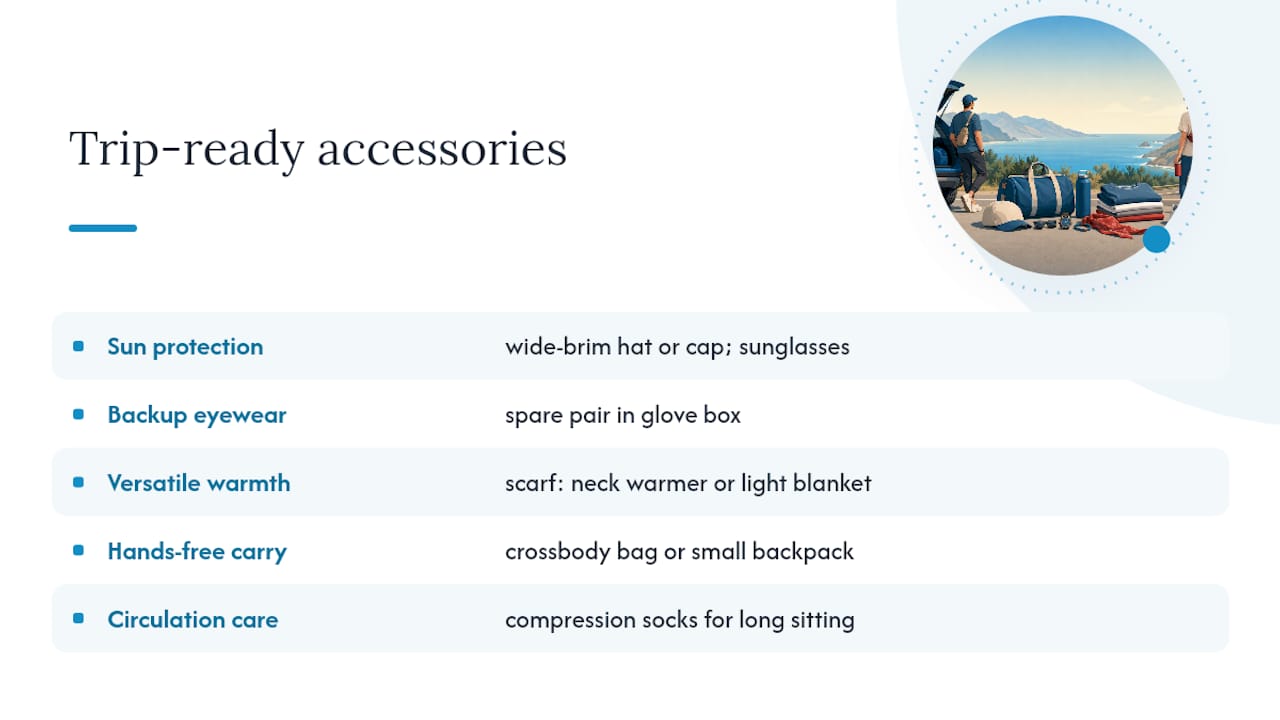
The right accessories solve small, recurring annoyances that add up over a multi-day drive. A wide-brim hat or a cap blocks sun glare through the windshield and doubles as coverage at outdoor stops. Sunglasses matter for the same reason, and a spare pair in the glove box saves the trip when the first pair gets sat on, which happens more often than anyone admits.
A scarf earns its spot for reasons beyond style. It works as a neck warmer, a light blanket for a napping passenger, or a barrier against a blasting AC vent. A crossbody bag or small backpack keeps essentials, phone, wallet, chapstick, snacks, within reach without digging through a suitcase at every stop.
Compression socks deserve a mention here too, since frequent long-distance travelers rely on them specifically for circulation during hours of sitting. They’re not glamorous, but neither is swollen ankles by day three.
Round out the list with a portable phone charger, a reusable water bottle that fits your cup holder, and lip balm with SPF. None of these are outfit pieces exactly, but they’re the difference between arriving at your destination looking put together and arriving looking like you fought the drive the whole way.
Why WattzGood Designs for the Road, Not Just the Closet
I think about road trips the way I think about EVs: efficiency matters, but so does show up somewhere looking like yourself. That’s the thinking behind every WattzGood tee. Soft, packable, and designed to travel well without needing an iron.
— Quincy
Building Your Capsule Around WattzGood Tees
A road trip capsule needs pieces that pull double duty, and WattzGood’s tees were built with exactly that in mind. The EV over GAS tee works as your fitted base layer under a flannel for cool mornings, or on its own with shorts once the sun’s fully up. The Plaid Tee doubles as your structured anchor piece in the 1-2-1 formula. Its pattern already reads as “put together” without needing an extra jacket layered on top.

For a simple, no-fuss option that fits into nearly every template above, the Wattz Logo Tee rolls down small enough to slide into a packing cube corner and comes out without deep creases. All three are soft, breathable cotton blends that hold up to repeat wear, which matters when your capsule depends on re-wearing pieces to keep the bag light. Roll them rather than fold them, and pair any one of them with a mid layer for cooler stretches or wear it solo once you hit warmer stretches of highway.
If you want your road trip wardrobe to say something about how you actually feel about the drive, not just survive it, start with the full tee collection and build your capsule from there.
Sources
- What to Pack for a Road Trip: Road Trip Packing List
- What shoes to pack for a trip — 3 pairs of travel shoes, that’s it
- I fly 77,000+ miles a year – this is my non-negotiable long-haul travel uniform
- What to wear on a road trip (editorialist)
FAQ
What should I wear on a road trip?
Wear a soft, breathable base layer, one or two relaxed pieces like joggers or wide-leg pants, and a structured anchor piece such as a jacket or flannel. Round it out with slip-on shoes that offer real support, following the three-pair shoe rule for footwear.
What is the 3-3-3 rule for a road trip?
There’s no single agreed-upon “3-3-3 rule” specific to road trip driving; the term is more commonly associated with a general clothes-packing guideline. For road trips specifically, the better-known framework is the three-pair shoe rule paired with the rule of threes for tops and bottoms.
What is the 3-3-3 rule for clothes?
Definitions vary across travel writers, but a common version suggests packing three tops, three bottoms, and three pairs of shoes that all mix and match with each other. The goal is the same one behind the rule-of-threes packing capsule: fewer pieces, more outfit combinations.
What would you wear on a road trip?
A go-to combination is a merino or jersey tee, stretch joggers or ponte pants, a packable jacket, and slip-on sneakers. A WattzGood tee like the Plaid Tee works well as the anchor piece since it already reads as intentional without extra layering.
How often should I stop to stay comfortable on a long drive?
Aim for a break roughly every two hours to stretch, swap into your slip-on shoes, and reset circulation. This also gives you a natural window to freshen up on multi-day trips.