
Pick DTG when your design has gradients, photo-realistic detail, or unlimited colors and you’re printing a handful of shirts. Pick screen printing when you need maximum durability, exact Pantone matches, specialty finishes like puff or metallic ink, or you’re running past the low hundreds in quantity. Everything else in this decision comes down to two variables: how complex the artwork is and how many units you need.
TL;DR:
- DTG printing is ideal for small orders under 50 units, especially with complex gradients, photo-realistic art, or personalized designs, due to its no setup cost.
- Screen printing offers better durability, especially with properly cured plastisol inks, and is more cost-effective for large runs with flat, solid colors or special effects.
- Fabric compatibility favors DTG on high-cotton blends, while screen printing can handle a wider variety of fabrics, including synthetics and heavier materials.
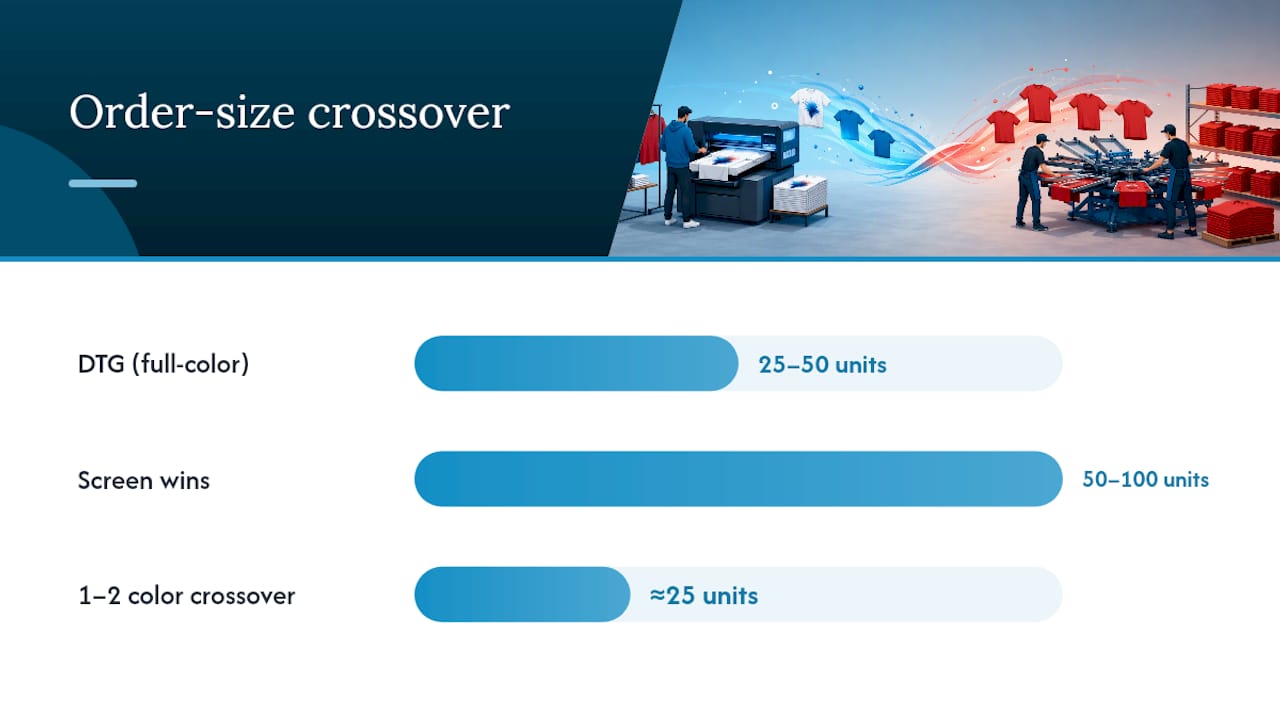
- The break-even point typically occurs between 50 and 100 units, with DTG remaining cheaper for short runs and screen printing becoming more economical at higher volumes.
- Combining both methods in hybrid workflows allows for large flat-color backgrounds with fine photographic details, optimizing quality and cost based on design complexity.
Table of Contents
- Screen Printing vs DTG: What DTG Printing Actually Does
- Screen Printing vs DTG: How Screen Printing Builds Durable Prints
- Which Method Wins on Cost, Quality, and Durability?
- What Does Your Order Actually Cost?
- How Do You Choose the Right Method for Your Order?
- Do Specialty Effects and Fabrics Limit Your Options?
- Why We Think About Print Method the Way We Do
- Shop the Designs That Fit Each Printing Method
- Sources
- FAQ
Screen Printing vs DTG: What DTG Printing Actually Does
Direct-to-garment printing works like an oversized inkjet printer aimed at fabric instead of paper. A specialized printhead lays down water-based pigment inks directly onto the shirt, building up color layer by layer the same way a desktop printer builds up a photo. Dark garments get a pretreat spray first, usually a starch-based solution, because without it the ink sinks into dark fibers and loses vibrancy. Because the process reads a digital file and prints it exactly, DTG functions much like an inkjet printer, allowing unlimited colors and gradients without extra setup. That’s the single biggest reason it dominates certain jobs and struggles with others.
Where DTG genuinely shines:
- One-off and small-batch orders. No screens to burn, no minimum quantity to justify setup cost.
- Photo-realistic art. Faces, landscapes, complex shading. Screen printing simply can’t replicate a smooth gradient the way an inkjet head can.
- Personalization and print-on-demand. Every shirt can carry a different name, number, or image with zero retooling between prints.
- Fast concept-to-shirt turnaround. A design can go from file to finished garment in under an hour on the right equipment.
Fabric choice matters more with DTG than most buyers expect. It performs best on high-cotton blends (ideally 100% cotton or close to it) because the ink bonds to natural fibers and produces a soft hand, the print feels almost invisible on the shirt rather than sitting on top of it like a sticker. Polyester and blends can cause dye migration or dull colors, which is why serious DTG shops test fabric compatibility before running an order.
Curing matters just as much as pretreating. Under-cured DTG ink cracks and fades faster than it should, so ask any vendor how they cure (heat press versus conveyor dryer) and for how long. A shop that rushes curing to hit turnaround targets is the same shop whose prints fade after eight washes. Typical per-piece production time runs a few minutes once the file is set up, which is why small orders stay affordable, but that speed advantage disappears once you’re ordering in bulk and paying for ink coverage on every single shirt rather than a flat screen setup fee.
Screen Printing vs DTG: How Screen Printing Builds Durable Prints
Screen printing pushes ink through a mesh screen using a squeegee, and each color in the design needs its own screen. A four-color logo means four screens, four passes, and careful registration to keep everything aligned. Between colors, garments often pass under a flash cure unit, a quick blast of heat that sets one layer of ink before the next color goes down. That layered, physical application is exactly why screen prints hold up the way they do over time.
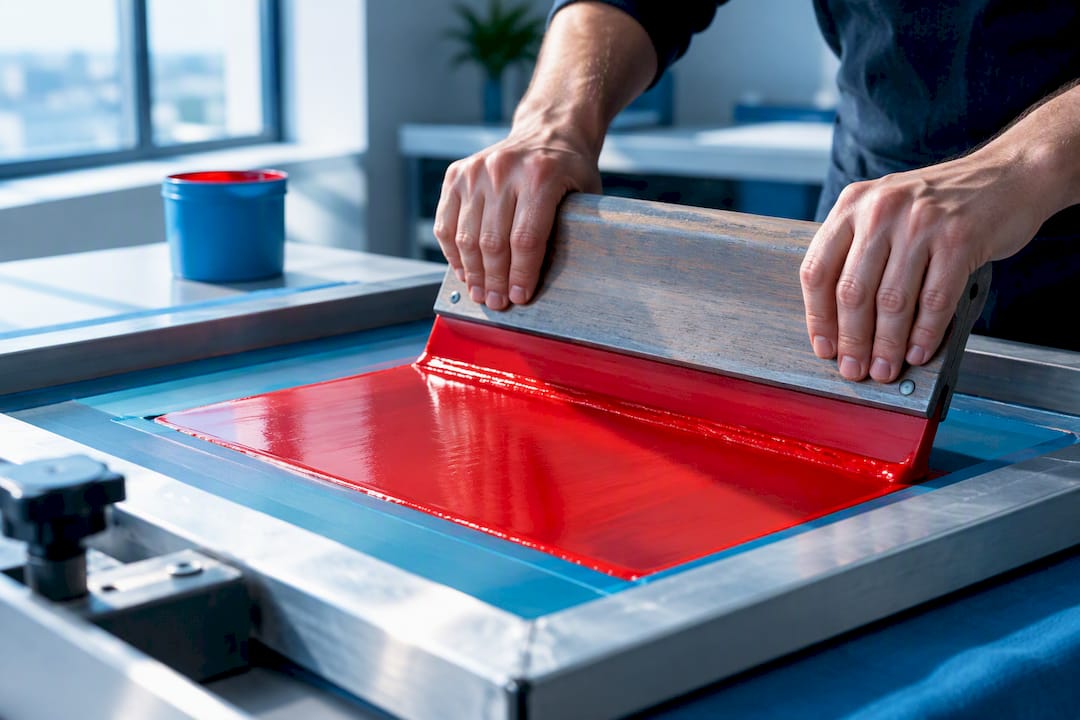
Durability is where screen printing earns its reputation. Properly cured screen-printed plastisol typically outlasts DTG prints before cracking, while DTG tends to show more visible fading after repeated washes. Plastisol ink sits on top of the fabric and creates a thick, opaque layer that holds color even on black garments, something DTG has historically struggled to match without heavy pretreat.
Screen printing’s other advantage is versatility in ink chemistry:
- Plastisol for opacity and vivid color on any garment shade.
- Discharge ink for a soft, dyed-in feel on 100% cotton.
- Metallics and puff additives for tactile, dimensional finishes DTG can’t replicate.
- Wide substrate compatibility, including heavy fabrics, canvas, and some synthetics that would choke a DTG printhead.
Quality hinges on details most buyers never ask about. Mesh count, emulsion type, and exposure tolerance control how sharp the final image looks, and a shop using worn screens or the wrong mesh count for fine detail will hand you a muddy print regardless of how good the artwork was. Squeegee durometer (essentially the hardness of the blade) and flash-cure timing between passes also affect how evenly ink deposits and how well colors register on top of each other. Setup for a multi-color screen job can take a couple of hours before the first shirt even prints, which is exactly why screen printing rewards volume: that fixed setup cost gets divided across however many units you run.
Which Method Wins on Cost, Quality, and Durability?
Neither method wins across the board, and that’s the point. The right choice depends entirely on which column matters most for your specific order.
| Factor | DTG | Screen Printing |
|---|---|---|
| Best for | Small runs, photo art, personalization | Large runs, spot colors, special effects |
| Cost/break-even | Cheaper for small orders | Cheaper for larger runs |
| Print detail | Excellent for gradients and photos | Excellent for flat, solid Pantone matches |
| Durability | Good, but more prone to fading | Stronger, but risks cracking if under-cured |
| Fabric compatibility | Best on high-cotton blends | Works across cotton, blends, synthetics, heavy fabric |
| Turnaround | Fast for one-offs, slower per-unit at scale | Slower to start, fast once screens are burned |
| Special effects | Limited to flat ink layers | Puff, metallic, discharge, glitter, high-opacity |
| Environmental impact | Less water/chemical use, print-on-demand friendly | Higher water/chemical use, more efficient at scale |
On cost and break-even: DTG carries almost no fixed setup cost, you pay per shirt based on ink coverage. Screen printing flips that: heavy fixed cost (screen burning, setup, registration) but a very low marginal cost per unit once the press is running. Digital textile printing eliminates screen setup and suits short runs, while screen printing stays cost-advantageous for large uniform batches, with the practical break-even commonly landing at quantities beyond typical small batch ranges depending on color count.
On design complexity: if your art has gradients, drop shadows, or anything photographic, DTG wins without much debate. If you need an exact Pantone match for a corporate logo or a flat two-color design, screen printing gives you tighter, more consistent color control run after run.
On durability: this is the tradeoff buyers underestimate most. Screen printing, when properly cured, resists cracking better over dozens of wash cycles. DTG prints, especially on blends or with insufficient curing, tend to soften and fade sooner. Neither is fragile when done right, but the failure modes differ: screen prints crack, DTG prints fade.
On fabric and pretreatment: DTG needs high-cotton content and pretreat for dark colors. Screen printing tolerates a wider range of fabrics, including synthetics and heavier canvas, without special prep beyond standard screen tension and mesh selection.
On turnaround: for a single shirt or a batch of ten with different designs, DTG wins easily because there’s no per-design setup penalty. For 500 identical shirts, screen printing’s higher throughput per hour once screens are burned makes it dramatically faster overall.
On sustainability: modern hybrid and digital textile workflows generally use less water and fewer chemicals than traditional screen setups, which gives DTG an edge for on-demand, low-waste production. Screen printing uses more water for screen reclaiming and ink cleanup, though high-volume runs distribute that environmental cost across far more garments, and factories increasingly blend both methods to cut waste where each one struggles.
What Does Your Order Actually Cost?
Cost breaks down into two buckets: fixed costs (screen burning, art separation, machine setup) and variable costs (ink per unit, labor, garment price). DTG has almost no fixed cost but a variable cost that climbs with every color and every square inch of coverage. Screen printing flips that ratio entirely.
Trade guides commonly place DTG as cheaper for single items and small runs, with screen printing becoming more cost-effective as the order size increases depending on color count. Here’s how that plays out with two common design types:
- One-color logo, 1 unit: DTG wins easily since there’s no screen to burn for a single shirt.
- One-color logo, 25 units: Close call. Screen printing’s setup cost is starting to spread thin enough to compete.
- One-color logo, 100 units: Screen printing usually wins. One screen, minimal ink cost, fast per-unit output.
- One-color logo, 500 units: Screen printing wins decisively. Per-unit cost drops sharply at this volume.
- Full-color photo, 1 to 25 units: DTG wins outright. A photo design would need six or more screens, which makes screen setup impractical below meaningful volume.
- Full-color photo, 100 to 500 units: Still often DTG-favorable unless the design can be simplified into distinct spot colors, at which point screen printing’s per-unit ink cost undercuts DTG’s ink-heavy full-color prints.
Pro Tip: Ask any printer for their exact break-even number based on your specific art file, not a generic rule of thumb. Color count and garment color both shift the math more than order size alone.
The pattern holds across most trade pricing models: DTG stays cheaper up to roughly 25 to 50 units on full-color work, and screen printing usually takes over somewhere between 50 and 100 units, sooner if the design uses only one or two flat colors. Getting a reliable quote means giving your printer four things upfront: exact color count (or confirmation it’s a photographic full-color file), garment color and fabric type, total quantity, and any special finishes you want. Printers who ask for all four before quoting are the ones who’ll give you an accurate number instead of a padded estimate.
How Do You Choose the Right Method for Your Order?
Run through this checklist before contacting any printer:
- How many units do you need? Under 50, lean DTG. Over 100, lean screen printing. In between, get quotes from both.
- How many colors, and are any gradients involved? Photographic or gradient art points to DTG regardless of quantity.
- What fabric are you printing on? High-cotton favors DTG; synthetics, blends, or heavy canvas favor screen printing.
- Do you need special effects? Puff, metallic, or discharge ink means screen printing is your only real option.
- What’s your timeline? Need it in two days? DTG. Have two to three weeks and a large quantity? Screen printing’s setup time pays off.
When you’re actually talking to a printer, ask these questions directly: What equipment do you run, and how do you cure prints? Can you share wash-test results for your standard ink? What’s your minimum order quantity for screen jobs? How long is your current lead time? Do you provide a physical or digital proof before running the full order?
Red flags to watch for: a shop that won’t share wash-test data, vague answers about cure temperature or dwell time, or a quote that doesn’t ask what fabric you’re using. A legitimate wash-test result should show minimal cracking or fading after 25 to 50 home washes; if a printer can’t produce that data, ask for a sample swatch before committing to a full run.
Pro Tip: If your order has one dominant spot-color design plus a small run of personalized versions, ask about a hybrid workflow, screen printing the base run and DTG for the customized pieces. Many shops will quote this combined and it often beats running everything through one method.
Do Specialty Effects and Fabrics Limit Your Options?
Some finishes simply aren’t available outside screen printing. Puff ink uses a foaming additive that expands under heat, creating raised, tactile letters, DTG’s flat ink layer has no mechanism to replicate that dimension. Heavy metallic coverage and full discharge prints (which actually remove the garment’s dye rather than sitting on top of it) also require screen printing’s thicker ink deposit and different chemistry. If your design calls for these effects, the method choice is already made for you.
Fabric compatibility creates similar constraints. Performance polyesters used in athletic wear often cause dye migration with DTG, where the garment’s own dye bleeds into the print and discolors it over time. Open-knit fabrics can also cause ink bleed-through since there’s less surface density to hold pigment cleanly. Screen printing’s plastisol ink sits above the fiber rather than absorbing into it, which sidesteps most of these issues, though it adds bulk and stiffness that some buyers don’t want on lightweight athletic fabric.
Hybrid workflows solve a real problem: designs that combine a large flat-color background with photographic detail. A shop might screen print the solid base color across the whole run, then use DTG to add customized or photographic elements to each piece individually. This is standard practice when a job needs both large spot-color coverage and fine detail, and it often costs less than forcing either method to do a job it wasn’t built for. If you’re weighing specialty finishes against your fabric, a resource like Lee Embroidery’s custom patch options shows another route entirely, adding embellishment as a separate, sewn-on element rather than printing detail directly onto tricky fabric.
Why We Think About Print Method the Way We Do
We think about production method the same way we think about design: it has to hold up in real use, not just look good in a mockup. Comfortable hand matters as much as color accuracy, because a shirt that feels stiff or plasticky gets worn once and shelved.
That’s why our approach varies by design. A photo-heavy or gradient-rich piece like our EV over GAS tee is a natural fit for digital printing’s unlimited color range. A clean, single-color mark like the Wattz Logo Tee plays to screen printing’s strength in flat, durable spot color. Pattern-heavy pieces like the Plaid Tee depend on fabric feel as much as print method, since the garment itself carries part of the design.
The technique is matched to the artwork rather than forcing every design through one process for simplicity or cost. This decision influences whether a shirt maintains its appearance after many washes.
— Quincy
Shop the Designs That Fit Each Printing Method
Each design is built around the print method that serves it best, rather than whichever process is easiest to run at scale. This approach aims to produce shirts suited to the artwork’s demands, whether detailed graphics or clean logo marks.
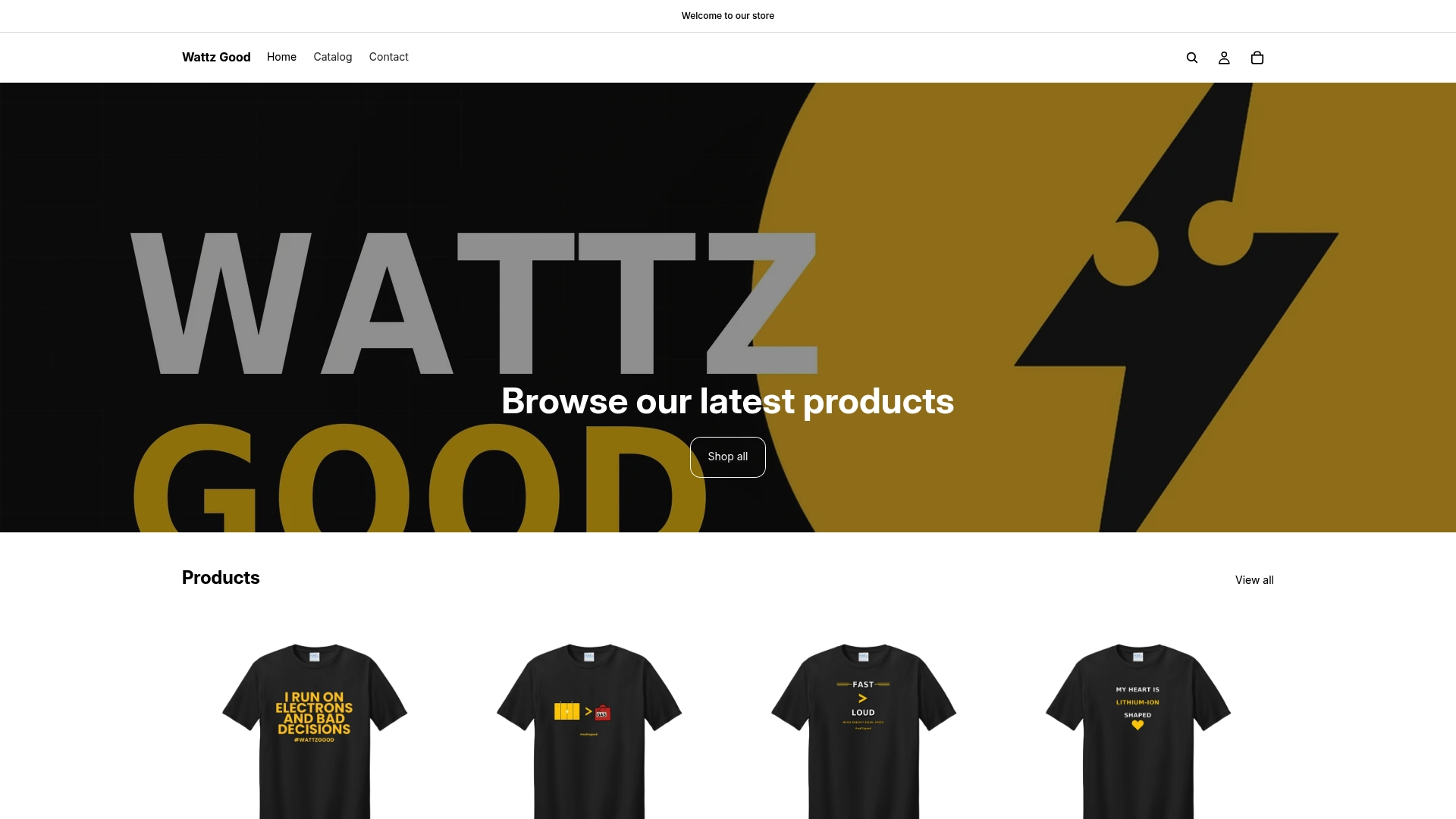
The EV over GAS tee carries the kind of bold, high-contrast graphic that benefits from full-color digital printing, no gradient lost, no color limit forcing a compromise. The Wattz Logo Tee keeps things simple with a clean single-color mark, exactly the kind of design where flat spot-color printing delivers crisp, durable results wash after wash. And the Plaid Tee shows how fabric pattern and hand-feel matter just as much as what’s printed on top.
Every piece in the collection is available now through the Wattzgood shop, no minimum order, no waiting on a bulk run to justify a purchase. If you’re shopping for something that says what you actually believe about EVs and sustainability, browse the current lineup and grab the one that fits.
Sources
FAQ
Is DTG or Screen Printing Better for Small Orders?
DTG is almost always the better choice for small orders because it has no per-color screen setup cost. For a single shirt or a run under roughly 25 to 50 units with full-color art, DTG’s inkjet-style process avoids extra setup entirely.
Does Screen Printing Last Longer Than DTG?
Yes, when properly cured, screen printing generally holds up longer before cracking, while DTG prints tend to show more visible fading after repeated washes. Curing quality matters as much as the method itself, an under-cured print in either technique will wear out faster than expected.
What’s the Break-Even Point Between DTG and Screen Printing?
The practical break-even commonly falls in the low hundreds of units depending on color count, though simple one or two-color designs can favor screen printing at much lower quantities. Digital printing suits short runs while screen printing wins at volume, so always ask for a quote based on your exact design.
Can You Combine Screen Printing and DTG on the Same Order?
Yes, hybrid workflows screen print a solid base color across a full run, then use DTG to add personalized or photographic detail to individual pieces. This is common when a design needs both large flat-color coverage and fine photographic elements.
Which Method Does Wattzgood Use for Its Apparel?
Wattzgood matches the method to the design: photo-heavy or gradient-rich graphics use digital printing for full color range, while clean single-color logos use screen printing for durable, flat spot color. Current products and pricing are listed on the Wattzgood site.